
The Used EV Wave: Why Class B Apartments Must Adapt
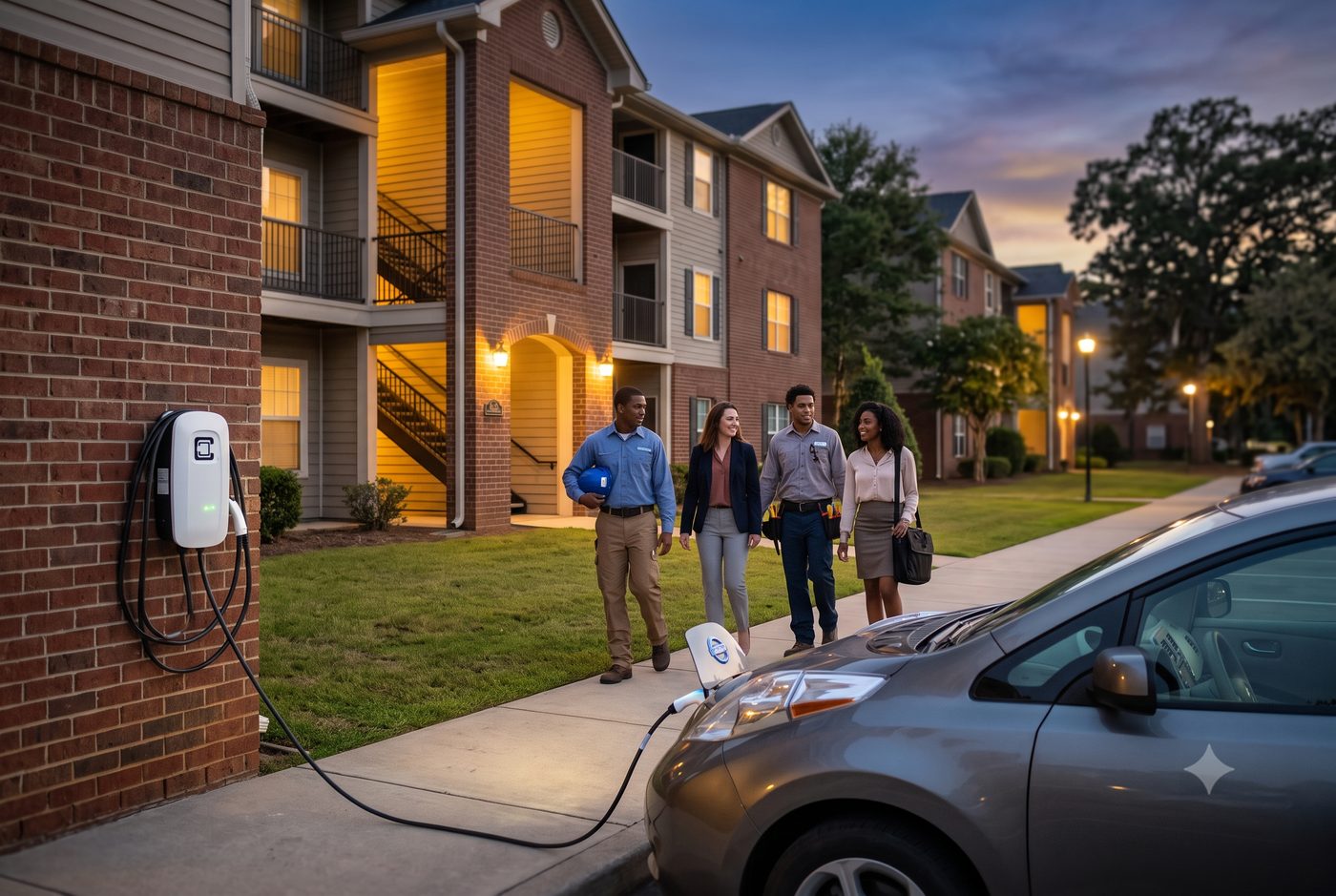
If you think EV charging is an amenity reserved exclusively for high-end luxury tenants in downtown high-rises, your demographic data is three years out of date.
Welcome to the 2026 reality check: Over 500,000 lease returns from the early 2020s mass-adoption phase have officially hit the used market. High depreciation has pushed used EV prices to price parity with—and sometimes cheaper than—used gas cars, with over a third of listings priced well under $25,000.
Because of this, the modern renter profile for EV drivers has shifted dramatically. Blue-collar workers, teachers, and young professionals living in Class B garden apartments and workforce housing are buying used EVs to save on high gasoline and maintenance costs. If your building cannot help them plug in, they will simply move down the street to a property that can.
Here is how middle-market housing can deploy EV charging profitably, without spending a fortune on heavy electrical infrastructure.
The Class B Electrical Dilemma: Avoiding the "Over-Engineering" Trap
Unlike brand-new Class A developments constructed from the ground up with massive electrical switchgear, older Class B garden apartments and wood-frame complexes typically have very tight electrical capacity. They are often limited to 100-amp or 200-amp panels per residential building.
When property owners look into EV charging, they often fall into the trap of "over-engineering." They assume that to install 10 charging stations, they need to buy a brand-new transformer from the utility company—a project that can cost upwards of $150,000 and take 18 months to complete.
The secret to affordable deployment is embracing the Low-Power Level 2 Standard. You do not need massive 80-amp or even 40-amp chargers for overnight residential parking. A tenant who parks their car from 6:00 PM to 7:00 AM (a 13-hour dwell time) only needs a 16-amp to 24-amp charge to completely replenish their daily commute. Lower power means significantly less strain on your panels and drastically cheaper installation costs.
The Magic of Over-Subscription & Dynamic Load Sharing
Even with lower-power chargers, a standard older building panel can easily get overwhelmed if every tenant plugs in at exactly the same time. Rather than dedicating a physical, full-power electrical circuit to every single charger, savvy property owners are using software-enabled Dynamic Load Sharing to safely "over-subscribe" their existing electrical service.
Think of load sharing as a smart traffic cop for your building's electricity.
Suppose your apartment building's house panel only has a small amount of spare power available (e.g., 24 kW), but you want to install 10 overnight charging ports. If you tried to run all 10 chargers at full speed simultaneously, the concurrent power draw would completely overwhelm the system and trip the building's main breaker.
Instead of paying for a massive panel upgrade, you install smart software that dynamically throttles the power based on real-time demand:
6:00 PM (Peak Demand): All 10 tenants get home from work and plug in at once. The software recognizes the electrical limit and safely steps the power down, giving all 10 cars a slow, safe trickle charge.
Midnight (Demand Drops): Several cars finish charging. As they hit 100% and drop out of the queue, the software automatically ramps up the power delivery to the remaining vehicles.
7:00 AM (Departure): Everyone wakes up with a completely full battery, and your building's electrical system was never stressed or overloaded.
Tenant Billing & Low-Barrier Deployment
In workforce housing, thin operating margins mean you cannot afford the "free charging" trap. You must pass the utility costs on to the driver, but you can do so in a way that generates passive Net Operating Income (NOI).
The most successful deployment strategy for Class B properties is the Hybrid Billing Model:
The Base Subscription: Charge residents a flat monthly premium (for example, $30 a month) just for access to a reserved EV parking space.
The Pay-per-kWh Margin: Charge a slight premium over your commercial utility rate. If you buy power from the grid at $0.12 per kWh, sell it to the residents at $0.18 per kWh. This covers your software subscription costs and creates a reliable new revenue stream.
Adding low-cost EV stations is a powerful defense mechanism against tenant churn. Replacing a tenant costs an average of $3,000 in marketing, cleaning, and vacancy costs. Installing a shared, load-balanced charger costs a fraction of that and secures multi-year lease renewals from a rapidly growing demographic.
Take Action on Your Resident Demographics
The used EV wave is democratizing electric transit. Multifamily owners who adapt to this new demographic using load-sharing software will win the retention game without spending a fortune on heavy infrastructure.
Your action item for this week: Send out a brief, 3-question survey to your residents asking, "Do you currently own an EV or plan to buy a used EV in the next 18 months?" You might be shocked to find that a massive percentage of your middle-market renters are ready to pull the trigger the second you provide a plug.